About
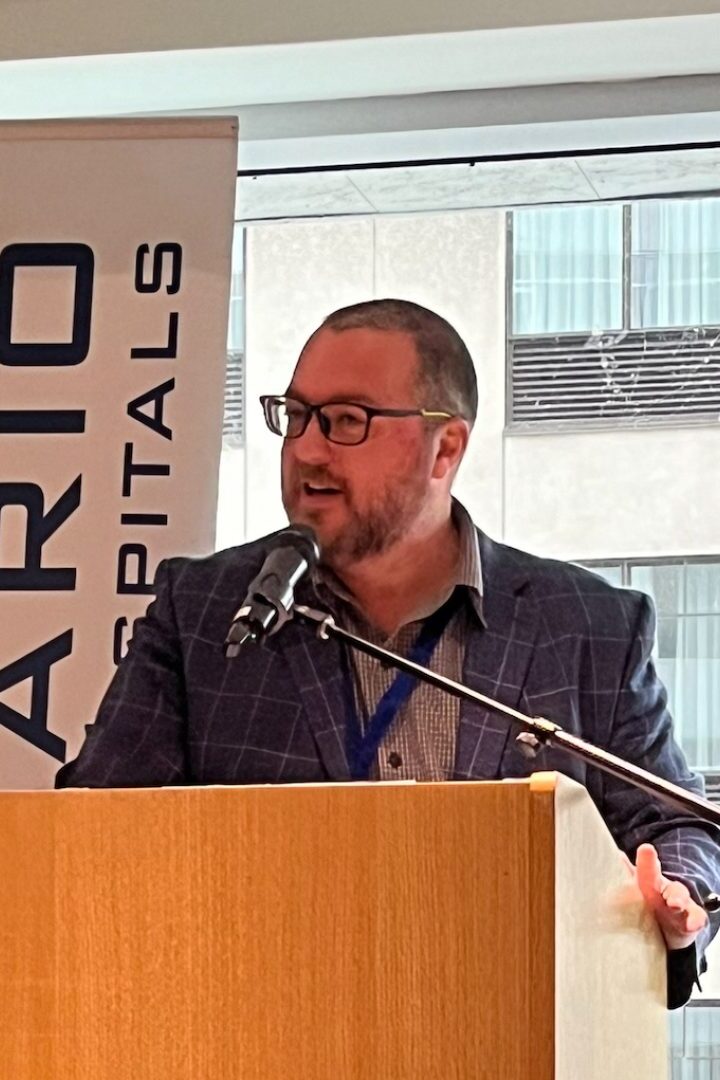
Dr. Alan Batt is an internationally recognized health systems scholar whose work has shaped how health professions approach competency frameworks, evolve scopes of practice, and develop equitable models of care.
His work bridges clinical practice, education, policy, and research – to date, spanning ten countries and five continents – with a focus on professional competency, health workforce evolution, and equitable healthcare delivery. He leads the development of key pan-Canadian frameworks, informs international frameworks, chairs national committees, and contributes to evidence-informed transformation of health systems.
In addition to teaching and mentoring emerging scholars, he serves in academic leadership roles internationally. He supervises doctoral research candidates advancing conceptual and system-level understanding of evolving professional roles, workforce evolution, and health system integration.
Dr. Batt’s efforts are focused on collaborative leadership, building research capacity, and translating knowledge into meaningful policy and practice improvements.
Strengthening health systems
I work to strengthen health systems through applied research, informing intelligent policy development, and system design, with a particular focus on prehospital, primary, and community-based care. My work supports governments, regulators, and health organizations to improve quality, safety, integration, and sustainability across complex health systems.
Improving care for marginalized populations
I focus on improving access, equity, and outcomes for underserved and structurally marginalized populations through culturally safe care models, needs assessments and health system innovation. This work emphasizes co-design, Indigenous health, rural and remote care, and addressing structural and social determinants of health.

Advancing health workforce policy and regulation
My work advances health workforce policy by exploring professional regulation, advanced practice, education, and workforce optimization—particularly for paramedicine and emerging health professions. I engage with regulators, professional bodies, and policymakers to support evidence-informed reform, self-regulation, and modernized workforce models.
Translating evidence into policy & practice
Across all areas of my work, I prioritize knowledge translation—bridging research, policy, and clinical practice to drive real-world impact. This includes guideline development, standards-setting, expert advisory roles to government, and global collaborations that ensure evidence meaningfully informs decision-making.

Current Projects






Equity
Co-chair a $1.2million pan-Canadian program funded by Healthcare Excellence Canada to support paramedic service teams to embed social prescribing practices in collaboration with community partners.
Research capacity
Co-chair the Steering Committee of an open-access, research repository dedicated to fostering open science and enhancing the visibility and accessibility of outputs and datasets related to emergency health services in Canada.
Policy
Co-chair an expert Technical Committee tasked with developing a new standard for all out-of-hospital care and inter-facility transport organizations.
Policy & Workforce
Advise on the development of evidence-informed strategies related to program maturity models, contextual program development and workforce evolution.
Competency
Lead the development of contemporary competency frameworks for the CLXT and Massage Therapy professions in Canada.
Policy & Regulation
Lead the mapping of competencies of paramedics from select jurisdictions to the regulatory standard in New Brunswick.
Select Completed Projects



Policy
Provided expert input into national standards related to opioid crisis response, information systems, community paramedicine, and professional competencies.
Policy & Competency
Provided expert input into provincial standards for community paramedicine; led the development of a provincial specialist competency framework; advised policymakers on service and regulatory design.
Workforce retention
Led the development of a contemporary national competency framework for paramedics, and a career framework to structure career advancement to improve workforce retention.
Equity
Supervised the exploration of community paramedic programs ability to meet social needs, and led the development of a bespoke HEC funded needs assessment tool for those developing programs.
Clinical governance
Provided expert advise related to advanced practice, regulatory reform and workforce evolution on a clinical governance and system review of a large North American emergency health service.
Competency
Provided expert input on competency frameworks across multiple health profession and health system reform projects in North America, Europe, the Middle East, India, Africa and Australia.



Policy
Doctoral research advancing conceptual and system-level understanding of evolving paramedicine role in policy related to people who use drugs.
Student: Jennifer Bolster
Workforce retention
Doctoral research examining organizational and systemic factors that contribute to mental health impacts on the workforce.
Student: Jennifer McCool-Closs
Integrated care
Doctoral research informing advancing integrated care through an intentional focus on equitable engagement of stakeholders and community partners.
Student: Cheryl Cameron
Workforce retention
Doctoral research examining the co-design and development of psychological supports for first responders’ families and friends.
Student: Michelle O’Toole
Competency
Doctoral research developing a co-created competency framework for mental health clinicians working with Black youth in Ontario.
Student: Rhonda Boateng
Scope of practice
Doctoral research contributing to developing advanced practice workforce capability in paramedicine in Ontario.
Student: Shannon Leduc
Latest news

Batt et al. Introducing CASPERR – the free, open-access Canadian Research Repository
Batt, A., Brohman, K., Choisi, T. J., Jensen, J., Steary, D., Smith, J. C., Wilson,…
Markides et al. Developing the Community Paramedicine Needs Assessment Tool
Markides TM, Shannon B, Cameron C, Hussain A, Caperon L, Batt AM. Developing the Community…

I’m so pleased to see this project come to reality with the technical support of…

Mason: McNally Project Emerging Scholar Award
Battlab member Paige Mason has been selected as the recipient of the 2025 McNally Project…
Ahmed, A.I., Batt, A.M. Exploring faculty development initiatives in medical education in resource-limited settings: perspectives…
O’Toole, M; Doyle, B; Eppich, W; Williams, B; Batt, AM. HUGS@Home – initial evaluation of…
Simpson et al . When facts become optional: confronting the rise of anti-science culture.
Simpson P; Eastwood K; Batt AM; Eaton G; Lindstrom V; Tavares W. When Facts Become…
Mausz, J; Johnston, M; Batt, AM; Donnelly, EA. Characteristics of 9-1-1 Calls Associated with an…
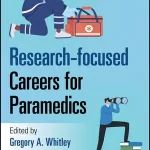
Book: Research-focused Careers for Paramedics
I had the pleasure of collaborating with Brendan Shannon, a friend and colleague of mine…
Restiglian, A; Martin, L; Long, D; Reynolds, L; Walker, T; Meadley, B; Finn, A; Batt,…
Bolster, JL; Ford-Jones, P; Donnelly, EA; Batt, AM. Connecting the dots: applying network theories to…
Tavares, Chawanda and Batt. An Exploration of Paramedicine’s Research Infrastructure in Ontario
Objective Paramedicine is expanding in scope and diversifying its contributions to healthcare systems and society….
Johnston, T; Mistiades, C; Beaumont-Boileau, R; Acker, JJ; Batt, AM. Primary Care Paramedic–administered Ketamine in…

Critical Levels Podcast: What is a paramedic?
I recently had the pleasure of sitting down with Zach Cantor on the Critical Levels…
The current landscape of gender-based inequity and everyday sexism experienced by women-identifying paramedics has been…